
Prediction Markets vs Sports Betting: What's the Difference?
Prediction markets and sportsbooks both let you take a view on a football match, but they are different products under different regulators — and in 2026 the courts are still deciding where the line sits.
ProphetX · Trade $50, Earn $75!
WCPREDICTSClaim21+ · T&Cs apply
New users only. T&Cs apply. ProphetX's minimum age is 18 (or the local age of majority if higher); we recommend 21+. Not available in Nevada. Trading involves risk.
TL;DR:
Sportsbooks are gambling operators licensed by individual states: you bet against a house that sets the odds. Prediction markets are exchanges regulated by the federal CFTC: you trade event contracts with other people at prices set by supply and demand. Whether states can regulate sports event contracts is contested in federal court. At the preliminary-injunction stage, the Third Circuit sided with Kalshi (April 6, 2026, 2-1), while the Ninth (August 28, 2026) and Sixth (September 25, 2026) Circuits ruled that Kalshi is unlikely to show federal law blocks state gambling laws. Three petitions asking the Supreme Court to decide are already on file.
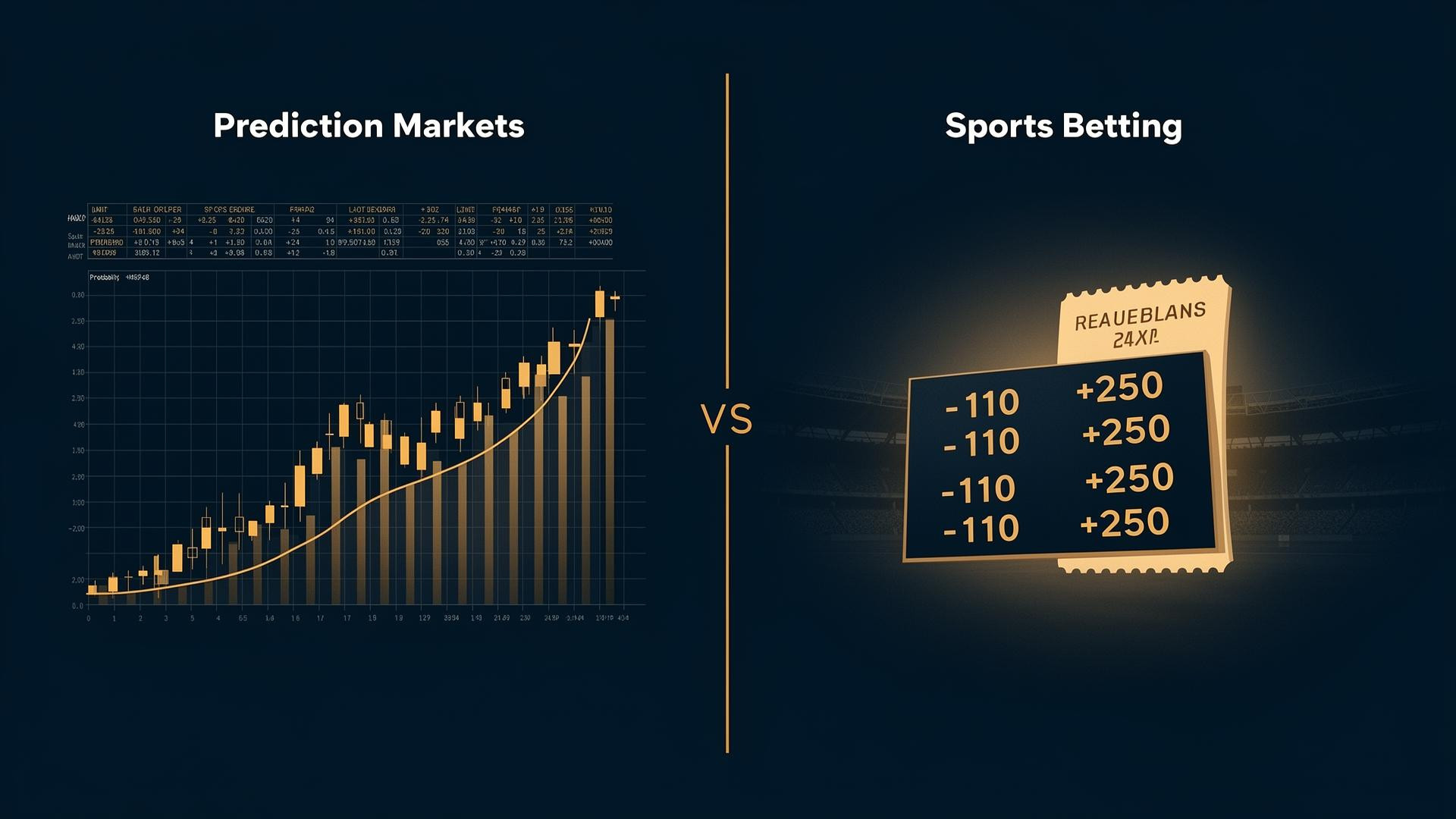
From a distance a sportsbook and a prediction market look alike: both let you take a view on who wins the match. Up close they are different products, with different regulators and different economics.
Who sets the price?
At a sportsbook, the house sets the odds and takes the other side of your bet. At a prediction market, the price comes from traders buying and selling contracts with each other; the exchange matches orders and earns a fee.
Who regulates them?
Keep reading · Education
How to Open Your First Prediction Market Account (2026)ProphetX · Trade $50, Earn $75!
WCPREDICTS
New users only. T&Cs apply. ProphetX's minimum age is 18 (or the local age of majority if higher); we recommend 21+. Not available in Nevada. Trading involves risk.
Last checked October 14, 2026
Sportsbooks are licensed state by state. Prediction markets such as Kalshi, Polymarket US and ProphetX operate as exchanges registered with the federal Commodity Futures Trading Commission (CFTC). That federal status is why they are available in states without legal sports betting — and why their sports contracts are now in court.
Where does the legal fight stand in 2026?
- Third Circuit, April 6, 2026 (2-1, with a dissent): ruled at the preliminary stage that Kalshi is likely to show federal law preempts New Jersey's gambling laws as applied to its sports event contracts.
- Ninth Circuit, August 28, 2026: ruled at the preliminary stage that Kalshi is unlikely to show federal law blocks Nevada's gambling laws; same-day rulings went against Robinhood and Crypto.com too. The Ninth Circuit covers several western states, including California, Arizona, Washington and Oregon.
- Sixth Circuit, September 25, 2026: reached the same preliminary conclusion for Ohio and Tennessee. Kalshi asked the full Sixth Circuit to rehear the case on October 9, 2026; the court has not ruled.
- Supreme Court: three petitions are already filed — No. 26-299 (New Jersey v. Kalshi), No. 26-338 (Robinhood v. Nevada) and No. 26-344 (Crypto.com v. Nevada). None has been granted yet. Until then, what you can trade depends on your state and can change.
This is a summary as of September 29, 2026, not legal advice. Each platform checks your location when you trade.
What can you do on a prediction market that you can't at a sportsbook?
- Sell a position before the match ends at the current price.
- Trade outcomes beyond sport, such as elections or economic data, on the same account.
- See the price as a probability in cents rather than as odds.
Keep reading · Education
How Event Contracts Work: A Football Fan's GuideWhat about costs?
A sportsbook builds its margin into the odds. A prediction market shows a fee per trade and a bid-ask spread. The two aren't directly comparable, so we don't rank one as cheaper: check the fee and spread on the specific market before you trade.
New to event contracts? Start with how event contracts work.
Sources
Every figure on this page is checked against primary sources — regulator filings, exchange documentation and official results. Prices and rules change; verify with the operator before trading.
- Customer advisories and investor protection notices — U.S. Commodity Futures Trading Commission
- Topic no. 419, Gambling income and losses — Internal Revenue Service
- Kalshi Help Center — fees, funding and account rules — Kalshi
- Polymarket documentation — markets, fees and resolution — Polymarket
- Designated Contract Markets (DCMs) — U.S. Commodity Futures Trading Commission
- The Commodity Exchange Act & regulations — U.S. Commodity Futures Trading Commission
Editorial coverage
Polymarket offers sports, politics and culture markets in US dollars, with a US app for event contracts.
We don't operate Polymarket and don't accept signups on this site. For state-specific availability and guidance, jump to the sibling editorial site for your jurisdiction.
From our network
Predictions Soccer
Soccer-first prediction-market coverage for a global audience.
Read more on Predictions Soccer
About the author
Catie Di Stefano
Fifteen years after starting out in regulated gambling in Malta, Catie Di Stefano now covers the World Cup and international football prediction markets full-time.
Editorial standards: How we research and rank
Keep reading
- How Event Contracts Work: A Football Fan's Guide
- How to Open Your First Prediction Market Account (2026)
- How to Deposit on Polymarket US (2026 Guide)
Next steps
Top platforms US traders are using:
Frequently asked questions
Are prediction markets the same as sports betting?
No. A sportsbook is a state-licensed gambling operator that sets the odds and takes the other side of your bet. A prediction market is a federally regulated exchange where traders buy and sell event contracts with each other.
Are sports prediction markets legal in every state?
It depends on the state and is being litigated. Kalshi is available in 47 states plus D.C., Polymarket US and ProphetX in 49 plus D.C. In 2026 federal appeals courts split on whether states can regulate sports event contracts, so availability can change.
What have the courts said in 2026?
All three appeals rulings so far are preliminary-injunction decisions, not final judgments. The Third Circuit (April 6, 2026, 2-1) ruled Kalshi is likely to show federal law preempts New Jersey's gambling laws. The Ninth Circuit (August 28, 2026, Nevada; also covering Robinhood and Crypto.com) and the Sixth Circuit (September 25, 2026, Ohio and Tennessee) ruled Kalshi is unlikely to show that. Three Supreme Court petitions are filed (No. 26-299, New Jersey; No. 26-338, Robinhood; No. 26-344, Crypto.com); none has been granted yet.
Can I sell a position before the match ends?
Yes, on a prediction market you can sell your contracts at the current price at any time before settlement.
Which is cheaper?
They charge differently: sportsbooks build a margin into the odds, while prediction markets show a fee and a bid-ask spread. We don't compare prices between them; check the fee and spread on the market you want.
21+ · T&Cs apply · Terms
New users only. T&Cs apply. ProphetX's minimum age is 18 (or the local age of majority if higher); we recommend 21+. Not available in Nevada. Trading involves risk.


